India has always been a land of ambition. A place where family businesses evolve into global powerhouses and young entrepreneurs rise from scratch to build empires. The story of wealth in India is not just about money. It’s about risk, resilience, disruption, tradition, and the complex relationship between society and business.
As of 2025, India is home to some of the world’s most influential billionaires, each shaping the economy in their own way. This article takes a detailed, narrative-style look at the Top 10 richest Indians, their journeys, and the impact they have had on the nation’s economic landscape.
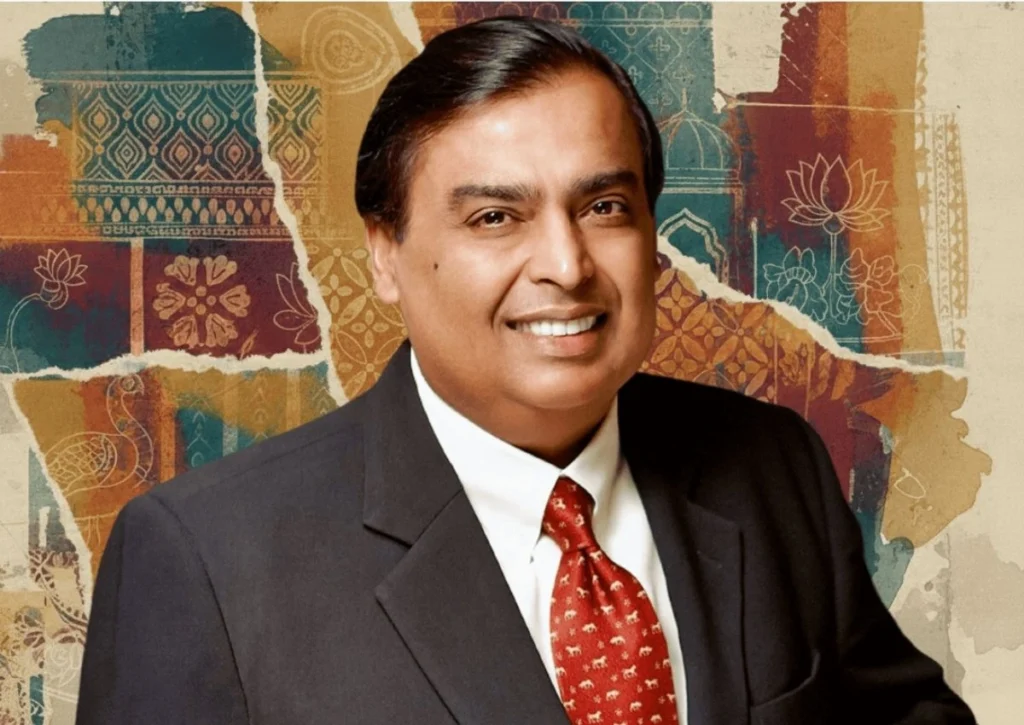
Mukesh Ambani – The Unshakable Titan of Indian Industry
Mukesh Ambani remains India’s wealthiest individual, and his position is no accident. His company, Reliance Industries, commands influence in almost every major sector of the Indian economy from petrochemicals and refining to telecom, entertainment, and retail. But what’s most striking about Ambani is his ability to constantly reinvent Reliance.
When India was shifting toward rapid digitization, Ambani sensed that telecom would change everything. He launched Jio, a bold and disruptive move that offered data at prices that completely shook the industry. In a matter of months, Jio transformed the way Indians used the internet. Today, it is one of the largest telecom operators globally.
Ambani’s ventures also extend into renewable energy, where he plans to build massive solar and hydrogen ecosystems. Whether it is Jio’s enormous data centers, the Reliance retail network, or the green energy vision, Ambani’s leadership has not only built wealth but has also shaped India’s economic trajectory.
Gautam Adani- The Infrastructure Commander
Gautam Adani’s rise has been nothing short of extraordinary. From a young trader in Ahmedabad to the head of an empire that includes ports, airports, power generation, mining, logistics, and green energy. Adani represents ambition at an unmatched scale.
Adani’s strength lies in identifying sectors where India needed massive growth. Ports, for example, were an obvious gap. Under his leadership, the Adani Group now operates the country’s largest commercial port. His bold bet on airports made the group one of the biggest private airport operators in India. Even after facing market and political turmoil, Adani rebuilt investor confidence and expanded aggressively in renewable energy.
His story is a reminder that wealth is often created at the intersection of opportunity and courage. And Adani has repeatedly demonstrated an ability to turn high-risk arenas into high-value enterprises
Savitri Jindal & Family- The Steely Backbone of Indian Industry
Savitri Jindal represents a powerful chapter in India’s industrial history. She took charge of the Jindal empire after the passing of her husband, O.P. Jindal, and under her guidance, the conglomerate expanded further.
Her family oversees a range of businesses: steel production, mining, power plants, and infrastructure. But what makes her unique on this list is not just her wealth but it is her leadership as a woman in an industry traditionally dominated by men.
The Jindal Group has played a crucial role in building India’s infrastructure. From supplying steel to major national projects to expanding manufacturing capabilities, the family continues to be one of the anchors of India’s industrial might.
Sunil Mittal & Family- The Telecom Visionary Who Connected India
Sunil Bharti Mittal is one of the pioneers of India’s telecom revolution. Decades ago, when mobile phones were luxurious items, he believed India could become a mass market for affordable communication. What followed was the rise of Airtel, a company that brought millions online and changed the way Indians communicated.
Mittal’s journey wasn’t easy. Telecom was heavily regulated, competition was fierce, and the financial pressures were enormous. Yet Airtel grew steadily, adapting to every new technological change from 2G to 5G.
Today, Airtel is more than a telecom company. It offers digital payment services, fiber broadband, satellite connectivity, cloud solutions, and more. Mittal’s business philosophy has always been rooted in scale, efficiency, and long-term thinking of qualities that have cemented his family’s place among India’s wealthiest.
Shiv Nadar-The Quiet Giant of India’s Tech Revolution
Shiv Nadar’s contribution to India’s IT sector is monumental. Long before the Indian tech boom became global news, Nadar founded HCL Technologies, a company that helped shape the early software and hardware industry.
HCL eventually grew into a multinational corporation known for its strong engineering culture, global IT services, and R&D-driven approach. Beyond business, Shiv Nadar is widely respected for his philanthropy. His foundation invests heavily in education from world-class universities to schools for underprivileged children.
Though he no longer leads daily operations, his ideas, values, and long-term approach continue to define HCL’s direction.
Radhakishan Damani & Family -The Value Retail King
Radhakishan Damani is one of the most intriguing personalities on this list. Quiet, media-shy, and deeply analytical. Damani’s rise is a story of observing markets, understanding consumer psychology, and building a retail model that simply works.
His retail chain DMart is known for:
low prices
consistent discounts
efficient inventory management
massive customer loyalty
Unlike many retail chains that struggled with expansion, DMart grew steadily, focusing on profitability instead of aggressive burn rates. Investors admire Damani for his discipline. Shoppers adore DMart for its affordability.
His journey from a stock market expert to a retail pioneer shows how deep understanding of consumer behavior can build extraordinary wealth.
Dilip Shanghvi- The Medicine Maker of India
Dilip Shanghvi began Sun Pharma with just a few thousand rupees and a clear ambition to create affordable generic medicines. Decades later, Sun Pharma is one of the world’s largest pharmaceutical companies.
Shanghvi’s success is rooted in strategic decisions: acquiring companies, focusing on complex generics, and constantly growing Sun Pharma’s global footprint. His calm, methodical leadership style reflects the precision required in the pharmaceutical world.
Beyond business, the impact of Sun Pharma on healthcare access is massive. Millions benefit from affordable medication produced by the company, making Shanghvi not just a wealth creator, but also a significant contributor to public health.
The Bajaj Family- Legends of Mobility
The Bajaj name is legendary in India. For decades, Bajaj scooters and motorcycles have been part of Indian middle-class life. Their famous tagline “Hamara Bajaj” still evokes nostalgia.
But nostalgia alone didn’t push the Bajaj family into the billionaire club. It was consistency, innovation, and a deep understanding of Indian transportation needs. Bajaj Auto expanded from scooters to motorcycles, three-wheelers, and global exports. Today, Bajaj vehicles are sold in over 70 countries.
Leadership across generations-from Rahul Bajaj to Rajiv Bajaj, has kept the company relevant in an increasingly competitive market.
Cyrus Poonawalla-The Vaccine Visionary Who Saved Millions
Cyrus Poonawalla’s work has changed the world. His company, the Serum Institute of India, produces vaccines that are used in more than 170 countries. By focusing on high-volume, low-cost production, Serum Institute made lifesaving vaccines accessible in places where affordability was a major barrier.
During global health crises, Serum Institute played a crucial role, producing vaccines at unprecedented scales. Poonawalla’s legacy is a reminder that wealth can emerge from businesses built around humanitarian values.
His story is not about luxury or boardrooms but it is about science, public health, and a powerful impact on human lives.
Kumar Mangalam Birla-The Modern Face of a Legacy Empire
Kumar Mangalam Birla took over the Aditya Birla Group at a young age after his father’s passing. Many doubted whether he could handle such a vast empire, but Birla not only maintained it but also expanded it significantly.
Today, the group spans:
cement
textiles
financial services
metals
packaging
telecom
renewable energy
Birla’s leadership style blends tradition with modernity. He is methodical, calm, and strategic. Under him, the group made bold bets such as the Vodafone-Idea merger while strengthening core businesses like UltraTech Cement, which is now one of the largest cement manufacturers in the world.
These ten billionaires represent far more than personal wealth. They are reflections of India’s:
economic priorities
consumption patterns
infrastructure needs
technological aspirations
global ambitions
A few striking patterns emerge:
1. India’s growth is driven by diverse industries.
Telecom, steel, IT, retail, pharma, infrastructure . These all play defining roles.
2. Legacy businesses still matter but new-age entrepreneurship is equally powerful.
3. Billionaires today influence policy, markets, and even social trends.
4. Wealth creation is accelerating but so is inequality.
This raises important questions about inclusive growth.

What These Billionaires Reveal About India
1. Wealth Comes from Many Sectors
From vaccines to telecom, steel to retail, India’s richest come from different industries. This diversity is a sign of a broad, evolving economy.
2. Legacy and New-Age Entrepreneurs Coexist
Ambani and Birla represent powerful legacy businesses.
Adani and Damani showcase new-age wealth creation.
Both contribute to India’s growth.
3. Scale Matters
Each of these individuals built at extraordinary scale- millions of customers, global presence, and massive national impact.
4. Influence Brings Responsibility
Philanthropy, transparency, and corporate governance are increasingly under public scrutiny. Wealth in India is no longer just personal; it is social.
Also check:- When Rest Repairs: The Hidden Power of Good Sleep
Final Thoughts
The richest people in India are more than financial figures: they are architects of the nation’s evolving economy. Their influence reaches every aspect of life- the technology people use, the goods they buy, the roads they travel, and the healthcare they receive.
Their journeys combine risk-taking, vision, resilience, and ambition. Together, they offer a window into India’s future: bold, complex, growing, and full of possibility.