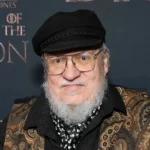
Ryan Hurst made a name for himself long before he was cast as Thor in God of War Ragnarök. With a career that spans prestige television, genre staples, and voice work, Hurst has long been associated with characters who carry quiet menace and emotional weight. That history is part of why his casting as Kratos in Amazon’s God of War web series has landed with such force. While the games’ heavy emphasis on performance capture and cinematic storytelling led many fans to assume that actors would simply reprise their roles for the live-action adaptation, Hurst stepping into the role of the Ghost of Sparta has generated a mix of excitement, apprehension, and intense debate.
For several years, Christopher Judge has been inseparable from modern interpretations of Kratos. Judge assumed the role beginning with 2018’s God of War and carried it through God of War Ragnarök, performances that redefined the character for a new generation of players. His Kratos was older, more restrained, and deeply haunted by his past. That version of the character became the emotional spine of what is now commonly referred to as the Norse Saga. Given that foundation, there was a widespread expectation that Judge would reprise the role in the television series, particularly since PlayStation Productions has emphasized authenticity in its adaptations.

Instead, Amazon and Sony opted for a different approach. Casting Ryan Hurst suggests the series is less interested in one to one continuity of performers and more focused on preserving thematic consistency. Hurst is not new to the world of God of War. His performance as Thor in Ragnarök was one of the game’s most talked about elements, presenting the thunder god not as a mythic caricature but as a brutal, emotionally damaged figure shaped by abuse, guilt, and fatalism. That portrayal stood in deliberate contrast to Kratos, while also reflecting him in unsettling ways.
The connection between Thor and Kratos in Ragnarök was not accidental. Both characters were written as instruments of destruction struggling with the consequences of lives defined by violence. Their confrontations were charged less by rivalry and more by recognition. In that context, Hurst’s casting as Kratos feels almost like an extension of a conversation the game itself began. It is a choice rooted in character logic rather than surface level familiarity.
Still, the decision raises questions. Judge’s physicality and vocal performance became iconic over the course of the Norse Saga, and many fans see his Kratos as definitive. Hurst, while physically imposing and more than capable of conveying menace, will inevitably bring a different energy to the role. That difference is at the heart of the anxiety surrounding the casting. Kratos is not simply a powerful figure. He is a symbol of evolution within the franchise, shifting from rage driven antihero to a man attempting, often unsuccessfully, to break cycles of cruelty.
The web series is expected to adapt the events of the 2018 game, focusing on Kratos’ journey with his son Atreus through the Norse realms following the death of Faye. That story hinges on intimacy as much as spectacle. Long stretches of the narrative are quiet, reflective, and deliberately restrained. Hurst’s previous work suggests he is well suited to that tone. Across roles in Sons of Anarchy, The Walking Dead, and other series, he has consistently portrayed men who carry violence as a burden rather than a thrill.
Another unanswered question is who will play Atreus. Casting Kratos is only part of the equation. The relationship between father and son is the emotional core of the story, and much of Kratos’ development is defined by how he responds to Atreus’ curiosity, anger, and emerging power. Without knowing who will take on that role, it is difficult to fully assess how Hurst’s Kratos will function within the series. Chemistry between the two actors will be critical, arguably more so than physical resemblance to the game characters.
There is also the matter of Thor himself. With Hurst now portraying Kratos, the role of Thor in the series remains open. Thor is a central antagonist in the Norse Saga, and his presence looms large over the events leading into Ragnarök. Casting a new actor as Thor creates an interesting reversal. In the games, Hurst’s Thor served as a dark mirror to Judge’s Kratos. In the series, another actor will need to embody that same thematic function opposite Hurst’s interpretation of the Spartan god.
From a production standpoint, the decision aligns with Amazon’s broader strategy for genre adaptations. Rather than leaning entirely on fan service casting, the studio has tended to prioritize performers with strong dramatic credentials who can sustain long form storytelling. The God of War series has already been renewed for multiple seasons, signaling confidence in its approach and a commitment to exploring the material beyond a single arc.
Whether this casting ultimately succeeds will depend on execution. God of War is a franchise deeply invested in tone, pacing, and character psychology. Spectacle alone will not carry the series. Hurst’s familiarity with the IP, combined with his proven ability to portray morally complex figures, gives the adaptation a strong foundation. At the same time, stepping into a role so closely associated with another actor is a challenge that few performers envy.
Also check: State with the Most Employment in India
For now, the reaction remains split but engaged. Excitement stems from the sense that the series is making deliberate, thoughtful choices rather than defaulting to the safest possible options. Fear comes from the understandable attachment fans have to Christopher Judge’s Kratos, a performance that reshaped the character and the franchise itself. Both reactions speak to the same truth. Kratos matters, and how he is portrayed matters just as much.