Anticipated M5 Chip to Redefine AI Processing, Graphics, and Storage Speeds
The rumor mill is spinning with wild speculations that Apple is working on a major update for its flagship MacBook Pro 14-inch, focusing on the release of its next-generation M-series chip, codenamed M5. Riding on the groundbreaking performance of the M1, M2, and M3 series chips, this update is expected to be much more than minor performance gains; market watchers predict it will introduce a new era of computing power, especially in the areas of device AI and hyper-fast storage architecture.
Should the rumors be correct, this new MacBook Pro 14 will bring yet another new, high standard for creative professionals, developers, and power users who want to push the limits of what they can do on a portable machine.
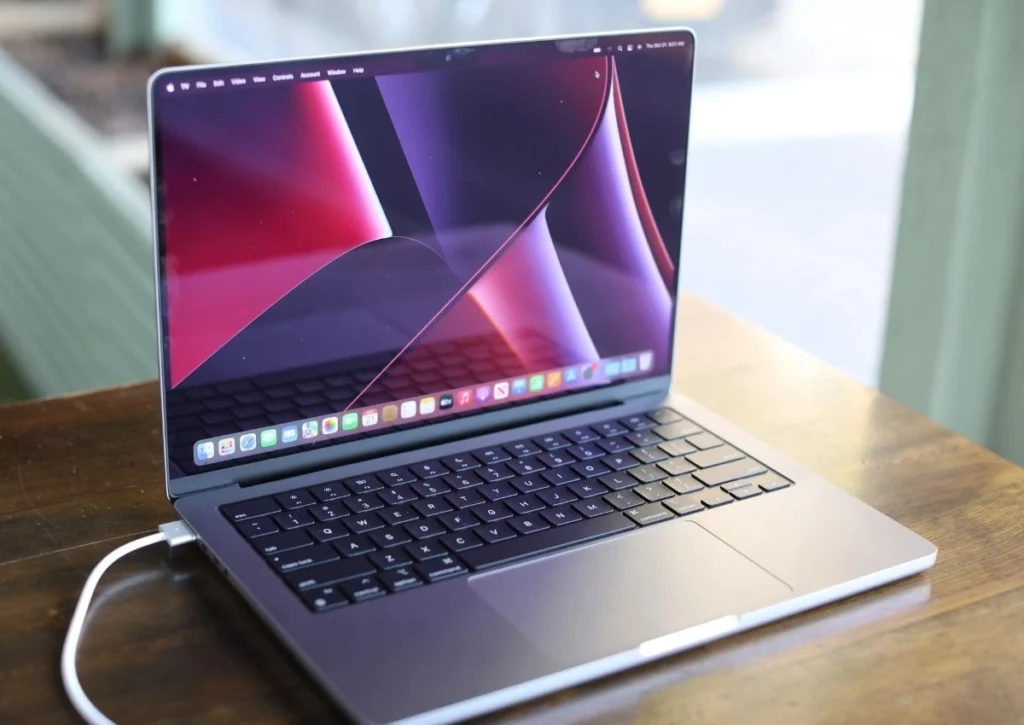
M5 Chip Neural and Graphics Processing Leaps:
Farther The core of the upgrade is said to be in the rumored Apple M5 chip.While all the information is still kept under cover, the consensus within the industry is that the two fundamental improvements will focus on enabling the ever-growing market for on-device AI applications:
1. Next-Generation Neural Engine
The biggest architectural change is likely to be a substantially improved Neural Engine. Apple is also expected to increase core count and overall throughput on the M5 chip next year, now that it is moving further away from the limitations of using an iOS-centric design. The upgrade would enable the 14-inch MacBook Pro to run more advanced machine learning models locally and in real time, allowing users to do without cloud services for the most demanding AI workflows. Improved AI processing directly equates to building better quality video output, live audio modulation, and quick content creation.
2. GPU and unified memory bandwidth
The M5 is also likely to come with a redesigned Graphics Processing Unit (GPU) which could bring an increase in the number of cores and thermal efficiency. Any performance gain would be compounded by the application’s faster access to the Unified Memory Architecture (UMA). Analysts expect Apple to raise the maximum configurable RAM and substantially increase memory bandwidth, to ease bottlenecks when working with massive 4K/8K video files, intricate 3D rendering projects or large-scale data analysis. Together, the new GPU and improved memory access will make the MacBook Pro the ultimate portable creative workstation.
Redefining Storage and I/O Performance
Although chip performance is what usually attracts media attention, the MacBook Pro 14 is also expected to include major advancements in its storage and input/output (I/O) features.
1. Faster SSD Controller
According to the sources, Apple is including a new SSD controller with the M5 chip. This enhancement in the hardware is considered to take sustained read/write speeds to much higher levels than realized now. Instant boot times, fewer wait times when transferring files, and less waiting during resource-heavy application loading For those who regularly work with massive multi-terabyte media libraries or instant-load application environments, this means near-instant boot times, faster file transfers, and reduced waiting during resource-heavy application loading.
2. Enhanced Thunderbolt Standards
The next MacBook Pro 14 is expected to support the newest Thunderbolt and USB-C standards. This would double the bandwidth of the current generation enabling the laptop to be ”future-ready” for next-generation external displays, high-speed network adapters, and high-capacity external storage arrays. The best I/O is essential for users with elaborate docking stations and external graphics solutions.

Design, Display, and Battery Life Considerations
On the design and chassis side, that Air is largely revolutionary in the crisp rounded corners shape of the MacBook Pro 14-inch design introduced with the M1 Pro, so major exterior changes are not expected. However, I expect subtle internal improvements:
Display Optimization: Although the incredible Mini-LED ProMotion display technology will most likely stay, Apple might also apply small efficiency optimization by improving the peak brightness or make minor reduction in the already thin bezels.
Thermal Management: The engineers are also expected to improve the internal thermal design to allow the M5’s increased raw power to be sustained when running at maximum load for extended periods of time without the machine’s signature silent cooling system being compromised.
Battery Efficiency: In spite of these performance improvements, one of the long-lasting appeals of the M-series platform is its power efficiency. In the M5 we expect to see the continuation of this trend with more power gates and low-power cores optimization, leading to even more battery life on day-to-day tasks, which is a key factor for mobile pros.
A rumored new MacBook Pro 14 with the M-series chip pack more than just a spec bump — it exemplify Apple’s vision for the best high-performance mobile computer. Given the intense focus on AI acceleration, memory bandwidth, and I/O speed Apple seems set to ensure that its laptop remains the best tool for a world increasingly shaped by complex creative and computational work. Now the build-up is on for the official announcement and to see if these anticipated enhancements do in fact bring professional laptop computing to the next level.
Also check:- The Magical Endorsement of Diwali, The Festival of Lights