Our energy production and consumption is at a crossroads. With the world confronting a whole new environmental challenge, the debate on renewable energy sources has no longer remained a niche issue; instead, it is now a widespread necessity of the world.
However, what is the difference between renewable energy and the traditional ones, and why should we care about it in our future?
Let’s explore!
What is renewable energy?
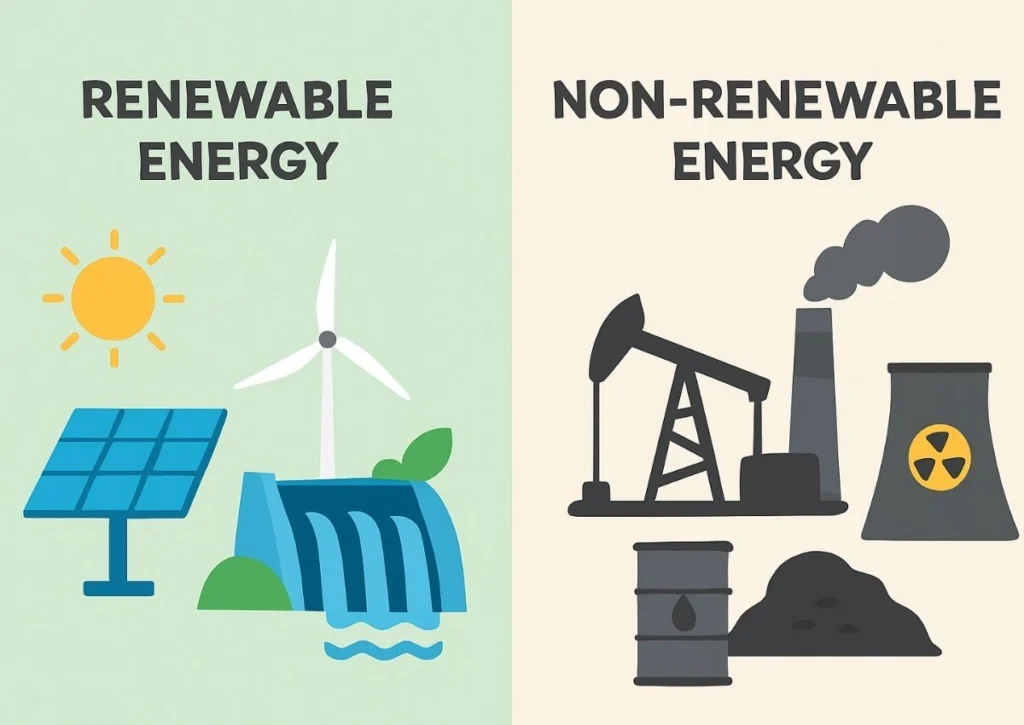
Renewable energy sources are natural resources that will automatically replace themselves as time goes by and they will not exhaust even with the amount of energy we use on them. Consider them as the best gift that nature has ever given. The sun risesevery morning, the wind blows, the rivers flow, and the center of the earth is hot. These are natural forces, which supply clean and sustainable energy avenues.
The most common renewable energy sources include:
- Solar energy from sunlight
- Wind energy from air movement
- Hydroelectric power from flowing water
- Geothermal energy from Earth’s internal heat
- Biomass energy from organic materials
What makes these sources truly special is their sustainability. Unlike fossil fuels that took millions of years to form and can’t be replaced once depleted, renewable sources regenerate naturally on a human timescale.
Understanding Non-Renewable Energy Sources
The non-renewable sources of energy are the resources that are not renewable and require millions of years to be formed under the surface of the earth. When we remove them and utilize them, they are lost forever. These are coal, oil, natural gas, uranium, and nuclear fuel.
These fossil fuels have been the engine of our civilization, fueling industrialization and our modern convenience, which is more than a century old. They, however, have major disadvantages, which are still haunting us on a global scale.
Fossil fuels when burned produce carbon dioxide and other greenhouse gases into the atmosphere, which contributes to climate change. Air pollutants that are produced by them also impact the environment and human health. The mining activities usually destroy natural ecosystems and terrain, leaving permanent marks on the earth.
The Fundamental Differences
The contrast between renewable and nonrenewable energy goes beyond just availability.
Let’s break down the key differences:
Environmental Impact: The sources of renewable energy also emit insignificant or no greenhouse gas when in use. One solar panel producing electricity produces zero pollution and a coal plant throws tons of carbon dioxide and damaging particulates into the atmosphere. This is the main distinction that makes renewables essential to climate change concerns.
Sustainability: Non-renewable resources are fast disappearing. In the course of these two hundred years, we have consumed what nature took millions of years to produce. The sun will shine for billions of years, and the wind patterns will persist as long as the atmosphere exists on the earth.
Cost Trends: This is where interest lies. Conventional fossil fuel prices are affected by the supply and demand, geopolitical tension, and extraction complications. Renewable energy prices, on the other hand, have been plummeting. The cost of solar panels has reduced by more than 90 percent during the last decade, and clean energy has become more affordable.
Energy Independence: Nations that have rich sources of renewable resources will be in a position to decrease their reliance on foreign fossil fuels. A country with good access to the sun or wind patterns can produce its own electricity and this will improve the energy security as well as the economic stability of that country.
The Rise of Solar Energy
The renewable revolution has taken the form of solar power, and it has every reason to be. Photovoltaic panels are able to directly convert sunlight to electricity without any moving components, emissions, or noise. The technology has grown and advanced tremendously, with the current panels recording high efficiency rates.
The most interesting thing to me is the versatility that was achieved by solar energy. You will find it making all but pocket calculators and the huge utility-scale power plants that supply power to thousands of houses. Homeowners are being turned into power producers by rooftop solar installations that are feeding surplus energy into the grid.
The solar has an impressive scalability. Solar technology is scalable to power either a remote weather station or an entire city. With the increasing battery storage technology, the major limitation of solar, which is that it can only operate when the sun is out, is no longer a limiting factor.
The use of wind power: Wind has its way.
Turbine windmills have become a symbol of clean energy, with their huge blades spinning beautifully in the air. The wind energy can be considered one of the quickest developing sources of renewable energy in the world, and contemporary turbines can be described as marvels of engineering.
Offshore wind farms are very exciting. Large-scale generation of power can be done easily using ocean winds which are stronger and more consistent compared to the ones on the land. Nations possessing large coastlines are pumping large sums into offshore wind power plants.
Wind power has become cost-effective. Wind power in most places is currently cheaper than the construction of new coal or gas plants. This competitiveness on cost is driving the shift towards the use of renewables at a rate that is even quicker than is expected by some experts.
Hydroelectric Power
Even before solar panels and wind turbines became the new fascination of people, there existed hydroelectric dams that produced clean electricity. The flowing water causes turbines to transform kinetic energy into electricity which supplies dependable and emission-free electricity.
Hydroelectric energy has an asset that most renewables lack: storage and flexibility. Pumped-storage hydroelectricity can serve as a huge battery, pushing water up the mountain when electricity is cheap and plenteous and then throwing it down, powering turbines on peak demand.
Nonetheless, there are environmental considerations of big dams. They change the ecosystem of rivers and are able to impact fish populations and local communities. The newer strategies are smaller, run-of-river installations that cause less harm to the environment yet produce a clean energy.
The contribution of Biomass and Geothermal
Biomass energy is a move to convert waste materials into useful energy in the form of organic waste, which includes agricultural waste, wood chips, and even city garbage. It is especially useful since it gives a means of getting rid of garbage as it also produces energy. Biomass could be carbon-neutral when utilized in an environmentally friendly manner, since the CO₂ emitted during combustion is equal to the CO₂ fixed by the plants during their growth.
Geothermal energy also uses the internal heat of the earth, which supplies baseload power, unaffected by weather or the time of day. Most of the electricity produced in Iceland is well-known geothermal generation. Although it is geographically restricted to regions that have ready geothermal power sources, this technology has very high levels of reliability when it comes to renewable power in those regions.
Challenges Facing Renewable Energy
Despite their enormous potential, renewable energy sources face real challenges. Intermittency is the big one the sun doesn’t always shine, and the wind doesn’t always blow. This variability requires backup systems or energy storage solutions to ensure a reliable power supply.
Energy storage technology is improving rapidly, with lithium-ion batteries becoming more affordable and new technologies like flow batteries emerging. Grid infrastructure also needs upgrading to handle distributed renewable generation rather than centralized fossil fuel plants.
Initial installation costs for renewable systems can be higher than conventional options, though this gap is narrowing rapidly. Government incentives and financing programs are making renewable installations more accessible to homeowners and businesses.
The Economic Case for Renewables
It seems that here is one thing that might surprise you because renewable energy is not only good for the environment but it is also becoming more economically intelligent. The cost of electricity generated from renewables has actually dropped and in most of the markets, it has become competitive or even cheaper than fossil fuels.
Renewable energy industry is also a source of employment. The solar installation, the wind turbine manufacturing and maintenance, and the energy efficiency services provide employment to millions of people all around the globe. Such jobs are not outsourceable; they are locally based and enhance communities in terms of economy.
An investment in renewables will minimize the exposure to the unstable prices of fossil fuel. When it is set up, the fuel of solar and wind is free forever. This is appealing to businesses and utilities that intend to make long-term budgets.
Making the Transition
The energy revolution in the world is already in progress. Nations across the globe are also establishing high renewable energy goals, with mostcountries having a target of a hundred percent of clean electricity in decades. It is not mere environmental idealism; it is a practical policy in response to economic and security realities.
As human beings, we are able to be involved in this shift. Rooftop solar installation, use of renewable energy by utility companies, clean energy policy advocacy, and energy-efficient choices help in expediting the transition from fossil fuels.
Final thoughts
The future of energy is definitely renewable. Technology is still advancing, the cost is decreasing, and the demand of people towards clean energy is increasing. It is not a matter of how we will shift to renewable energy sources, but a matter of how soon it will be done.
Each solar panel put up, each wind turbine set up and each electric car charged up with clean energy would be a step toward a sustainable energy future. Renewable energy revolution is not in the offing, but now it is here and it is changing the way we energize our world with every single installation.
Understanding the differences between renewable and nonrenewable energy sources helps us make informed decisions about our energy future. As we face climate challenges and resource constraints, renewable energy offers a path forward that’s both environmentally responsible and economically viable. The transition to clean energy isn’t just necessary it’s an opportunity to build a better, more sustainable world for generations to come.